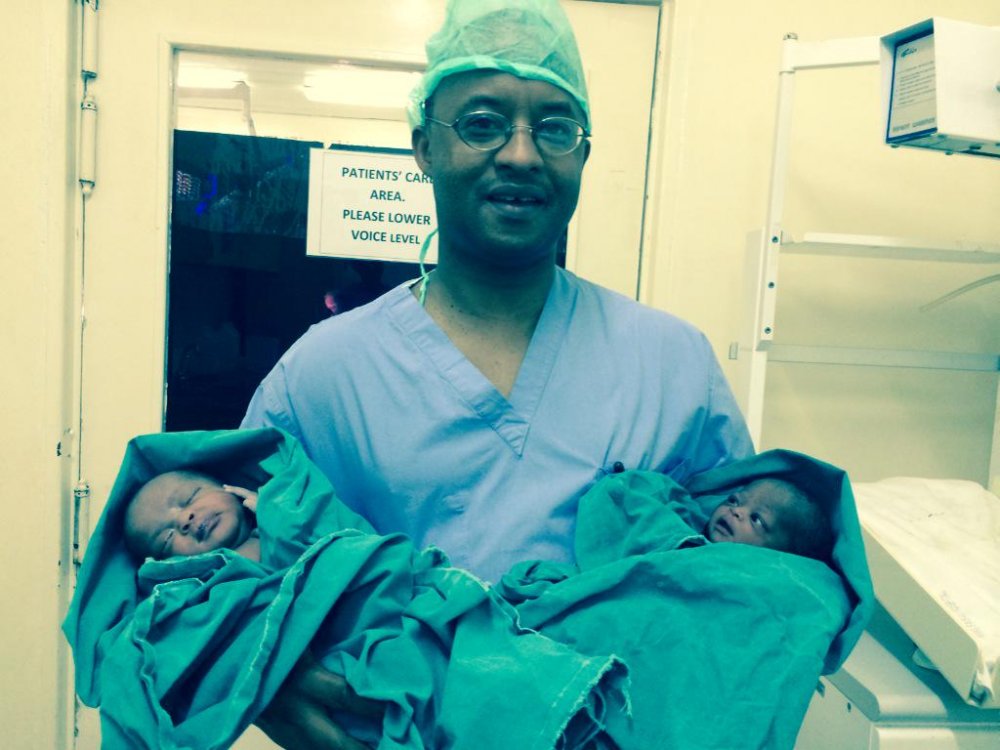
The first Rwandan born using IVF [In Vitro Fertilization’] today is eight years old. That is, he was born without sexual intercourse between a man and a woman. This method was approved by the Government of Rwanda in 2014, where the eggs of a woman and a sperm of man are combined, they are put together in the laboratory after seeing that they can produce an egg that will produce a child, and it is placed in the uterus of the woman.
This work is based on the strict control and stimulation of the woman’s fertility; taking the female’s egg and combining it with the sperm in a designated place in the laboratory. The resulting embryo is nurtured in a designated area for between two and six days and is then implanted (inserted) into the woman’s uterus in order to help the woman become pregnant.
It is a method that many people may not know is done in Rwanda. The State Secretary in the Ministry of Health in charge of Primary Care, Dr Mpunga Tharcisse, said that these services are currently being implemented at the King Faisal Hospital and the Military Hospital in Kanombe.
He said, “The doctors who do it are trained, in Faisal the service has started and in Kanombe it is working. In the next two years we will have two major services in the hospital that support people using assisted reproduction.
Normally, a child is born when the woman’s sperm meets the man’s, and they meet in the woman’s body [in the uterus]. But there are times when it is not possible for various reasons, such as the fallopian tubes are found to have disappeared, the sperm cannot meet or the sperm is not strong enough to reach its destination.
So in that case, this IVF method is the one to use. Rwandans participate in large numbers. In 1977 this method of fertilization was used for the first time in human history. At that time, a British woman and husband used this method after more than nine years of childlessness.
On July 25, 1978, they gave birth to a two-pound child who was named Louise Brown. On Rwanda’s side, this IVF service started in private clinics in 2014, different people are participating and in 2018, Kanombe Military Hospital also started it.
The information IGIHE learned is that in order to receive this service of fertilization, you are charged 5 million Frw privately, while in Kanombe Military Hospital you pay 2 million Frw. This cost of IVF services is due to the fact that the equipment used is almost all imported from outside the country.
Gynecologist, Dr. Eugène Ngoga, said that this service is very popular so far the statistics show that at least 500 people have been born through this method of fertilization. Dr Ngoga, who currently works at the Kanombe Military Hospital as a gynecologist, says that there are many patients who have problems with infertility so that the family is happy again when they receive this service and are able to have children.
He said, “It’s a serious problem that people often don’t give them any strength, but we often meet with those parents who have very serious problems, the lack of offspring is a problem that worries them a lot.”
He continued, “We saw a lot of people coming to us, and it helped that they were able to have offspring, a family was found, and their lives changed.” Dr. Ngoga says that the number of people born through this method of insemination in Rwanda is increasing and they are as healthy as those born through intercourse between a man and a woman.
“Some have already grown up because if we started in 2014, the first children are eight years old and now where I speak there are pregnant women who may be born in the coming days.” He continued, “I feel it is a service that is very needed and people are coming, we are helping them as much as we can and we will continue.”
Reproductive health experts point out that otherwise, if a couple has been having sex for a year without getting pregnant, it is better to go to the doctor and make sure there is no problem behind it.
This method is one of the most useful when the doctor sees some of the various problems related to the testicles, which are weak or weak, women who have irregular periods of fertility and those who are infertile for unknown reasons.