According to the World Health Organization (WHO), there are more than a million people with mental illness worldwide, which is a serious problem because mental health is the basis of public health.
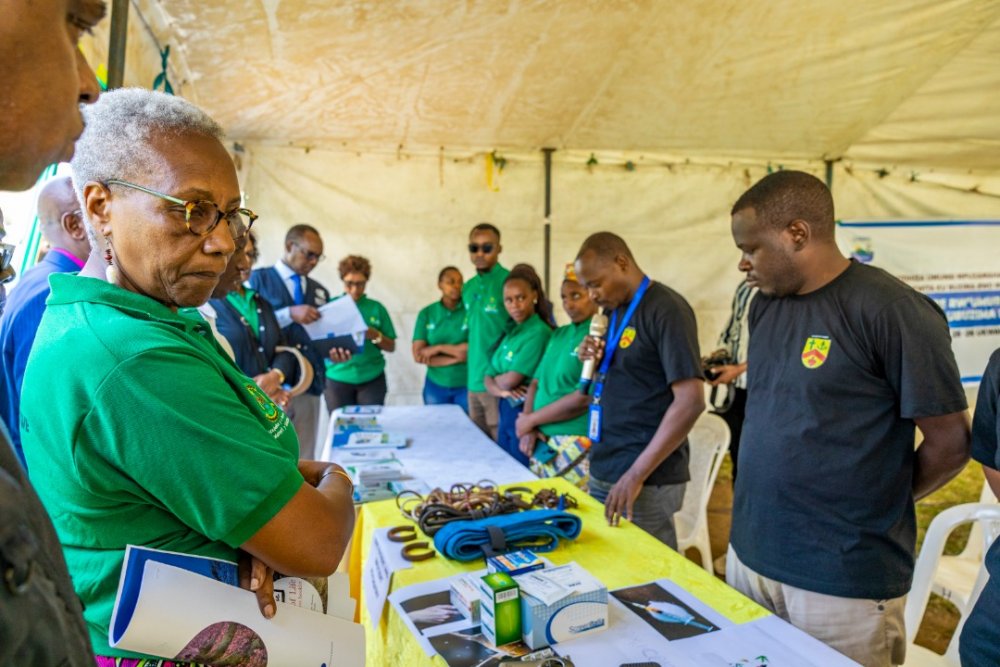
Every year the world celebrates Mental Health Day. It is a day celebrated on October 27, 2022, under the theme “Strive for a better life by taking care of everyone’s mental health”.
The statistics of the psychiatric hospital of Caraes Ndera, show that in the last year 2021/2022, they received 96,357 patients, which is an increase of 29.6% or 21,993 compared to the previous year [2020/2021].
It is an alarming number but the most worrying thing is that more than 70 percent of them are young people and their problems are caused by drugs and alcohol. 42% are between 20-39 years old, 38% are over 40 years old and 20% are under 19 years old.
Psychiatrist, Dr. Augustin Gatera says that Rwanda has done a great job at the world level in dealing with the problem of mental illness through health counselors.
Dr. Gatera says that there is no mental health without a person’s health, and he asks Rwanda to continue to put in effort to improve the medical programs for the people and also to teach Rwandans how to take care of the mentally ill.
He said, “WHO thanks Rwanda for the various programs it has established to care for mental patients, there are trained health counselors throughout the country to help patients, there are doctors even though the number is low. Everyone is required to take care of the mentally ill because if you have a mental illness you are not healthy.”
Statistics show that 14% of the mentally ill are young people, and this is because they are involved in drugs, prostitution and theft, some of which have been identified as the leading causes of mental illness.
One of the problems that people with mental illness face is being ostracized by their families and neighbors, where instead of being treated at designated hospitals, they are taken to witches and traditional healers who are believed to be bewitched.
The Ministry of Health says that it has launched a campaign every October to explain to Rwandans that mental illness is a disease like any other, that those who are diagnosed with symptoms should be treated like any other patient.
Dr. Kayitashonga Yvonne, who heads the mental health department at the RBC National Health Center, says that no one is a candidate for this disease, so everyone should take the first step in fighting it.
He said: “Mental patient, it’s me, it’s you, anyone who has had a problem can have a mental problem, but if you live with it, don’t comfort, don’t listen, don’t take to a doctor or even to a counselor, you’re going to be a patient.” .
He went on to say that the isolation and stigmatization of anyone who has experienced a mental health problem is what makes a person feel ashamed of seeking medical services. One of the people who had this mental problem that led to him being taken to the Iwawa Correctional Center, Niyonkuru Jean Claude says that it started because he was involved in drugs, and he asks the youth to avoid it.
In his testimony, he said: “What I would ask my fellow youths is to avoid drugs because that is what caused me to have a mental problem and I was taken to Iwawa. I just thank our government for establishing many programs to help people with mental illness. that photography also sustains me and my family.”
Jacqueline Nyirahabimana, who works at the CARAES Ndera Psychiatric Hospital, in the Department of Occupational Therapy, says that if a mental patient is cared for on time, he will be treated and cured, and he will work and be productive like other people.
This doctor explains that they say that a person has a mental illness when there are changes in the mind, performance and behavior, and the person begins to behave differently from what society determines.
There are overt mental illnesses such as running around, not cleaning, stonewalling, severe anxiety disorders such as anorexia and mood disorders that can go from extreme highs and lows to extreme happiness. worshiping whoever he sees.
Rwanda says it will continue to put effort into bringing mental health services closer to the people and increasing the campaign so that Rwandans understand this disease better, the problem of isolation is a thing of the past.