One of the world’s most remarkable countries, commonly referred to as the “country of a thousand hills,” is famed for its magnificent beauty and kind people.
Its volcanoes, highland forests, and expansive plains are home to amazing fauna, giving it a remarkable biodiversity.
There is so much more to see and do than just view the gorgeous gorillas, which draw tourists from all over the world.
Lake Kivu
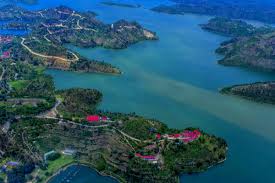
One of Africa’s big lakes, Lake Kivu is located in the Kivu Belt Area and spans the entirety of western Rwanda. Comparing Lake Kivu to other African lakes, there are major differences. At a depth of 480 meters, it is not only the deepest in Africa but also entirely secure. There are no crocodiles, hippos, or other harmful animals to be found in Lake Kivu’s crystal-clear, pristine water. Also absent from Lake Kivu is bilharzia, a parasite often found in tropical regions. Due to this, the lake is entirely safe, and you can swim at any of the lovely beaches that line its banks. Although being a well-liked tourist site in Rwanda, Lake Kivu is still out of the reach of mass tourism and foreign tour companies.
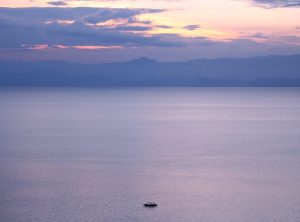
Being a portion of the Great Rift Valley of Africa, Lake Kivu is scattered with islands and inlets along its shores, offering lovely beach resorts, breathtaking views, and a variety of hiking and cycling options.
Volcanos National Park
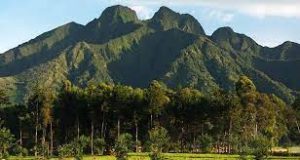
A rich mosaic of montane ecosystems, including evergreen and bamboo forest, open grassland, swamp, and heath, can be found in Volcanoes National Park, which is located in Rwanda’s far northwest. This magnificent mountain range is home to the endangered mountain gorilla.
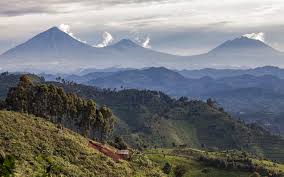
The chain of dormant volcanoes that make up the Virunga Massif Karisimbi, the highest at 4,507 meters, Bisoke with its lush crater lake, Sabinyo, Gahinga, and Muhabura—are the inspiration for Volcanoes National Park.
Nyungwe Forest National Park
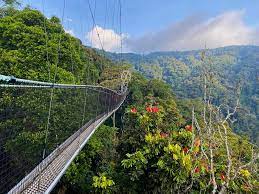
Nyungwe, one of Africa’s oldest rainforests, is incredibly gorgeous and home to a wide variety of species. The mountainous area is teeming with fauna, including 12 different primate species, including the L’Hoest’s monkey, which is exclusive to the Albertine Rift, as well as a tiny colony of chimpanzees.
The majority of Rwanda’s catchment area, Nyungwe, receives a lot of rain and provides water to 70% of the nation.
A ridge that cuts through the forest creates a watershed between the Congo and Nile drainage systems. The most remote source of the Nile, the longest river in the world, is allegedly a spring on the slopes of Mount Bigugu.
Akagera National Park
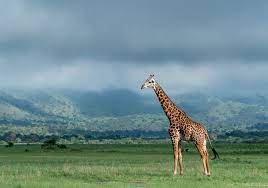
The savannah and riparian wetland mosaic of Akagera National Park is similar to that of the renowned game parks of the East African Rift.
Because of the 1,200 square kilometers of land that border Tanzania, giraffes, antelopes, jackals, and other animals graze freely in the area.
Outfitters are now arranging game drives and wildlife walks from the scattered hotels that already exist as safaris gradually gain in popularity.
Also, the environs are stunning, with the Kagera River’s meanders giving way to the glittering Lake Shakani, countless papyrus swamps, and numerous protected birdwatching sites.
Kigali

The stirring Genocide Memorial and the magnificent presidential palace are two sights you must see. Other from that, enjoying the newly found national confidence, shopping Rwandan handicrafts in the bazaars, and drinking cool drinks in the rowdy nightclubs are all that remain.